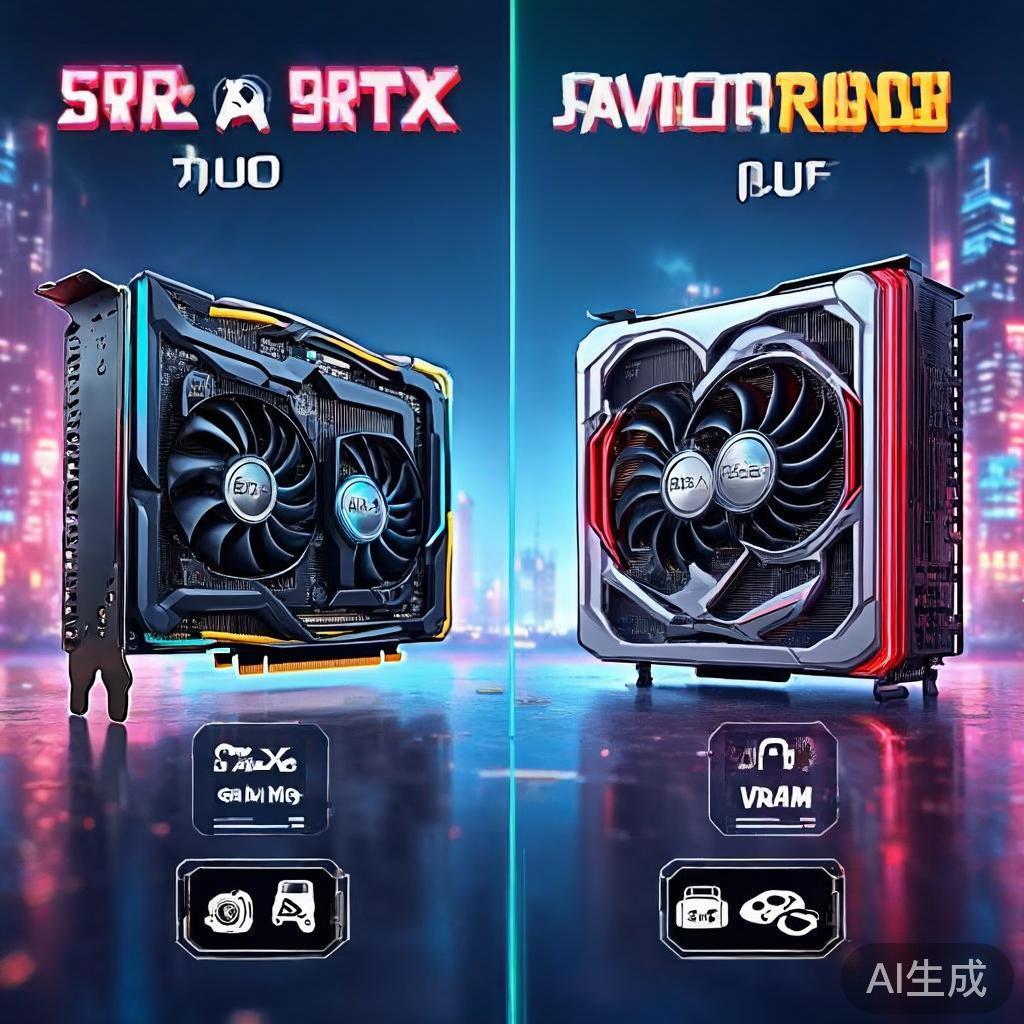
2026年显卡购买指南:游戏 vs AI生产力 – NVIDIA RTX 50系列 vs AMD Radeon RX 9000系列深度对比 2026 GPU Buying Guide: Gaming vs AI Productivity – NVIDIA RTX 50 Series vs AMD Radeon RX 9000 Series Deep Comparison
 广告招租
广告招租 2026年的显卡市场已经彻底变天了。过去,我们选择显卡主要看它能跑多少帧;今天,AI加速能力、显存大小、以及超分辨率技术成为了同样重要的决策因素。NVIDIA 凭借 RTX 50 系列(Blackwell 架构)继续巩固其 AI 和光追领域的霸主地位,而 AMD 则用 Radeon RX 9000 系列(RDNA 5 架构)在光栅性能和性价比上发起猛攻。无论你是硬核游戏玩家、AI 爱好者,还是两者兼而有之的混合用户,这篇深度对比指南都将帮你理清思路,找到最适合你的那张显卡。 The GPU market in 2026 has fundamentally changed. In the past, choosing a GPU was mostly about raw frame rates. Today, AI acceleration, VRAM capacity, and upscaling technology are equally critical decision factors. NVIDIA, with its RTX 50 series (Blackwell architecture), continues to dominate in AI and ray tracing, while AMD's Radeon RX 9000 series (RDNA 5 architecture) fights back with superior rasterization performance and value. Whether you're a hardcore gamer, an AI enthusiast, or a hybrid user, this deep-dive comparison will help you find the perfect card.
购买背景:为什么2026年选显卡更复杂了? Buying Context: Why Choosing a GPU in 2026 Is More Complex
如果你觉得选显卡只是看个型号和价格,那你就错了。2026年的显卡选择,是一场关于“算力定义”的博弈。以下是四个你必须理解的核心变化: If you think choosing a GPU is just about looking at model numbers and prices, think again. In 2026, the choice is a battle over how "compute power" is defined. Here are four core changes you must understand:
- AI加速成为核心战场: NVIDIA 的第五代 Tensor Core 和 AMD 的专用 AI 加速器不再只是锦上添花,而是决定 AI 任务效率的关键。从运行本地大语言模型(LLM)到 AI 图像生成,这些核心直接决定了你的等待时间。 AI Acceleration is the New Battleground: NVIDIA's 5th-gen Tensor Cores and AMD's dedicated AI accelerators are no longer just nice-to-have; they are critical for AI task efficiency. From running local LLMs to AI image generation, these cores directly determine your wait times.
- 超分辨率技术成为性能倍增器: DLSS 4 和 FSR 4 已经成为了衡量显卡性能的“新基准”。NVIDIA 的 DLSS 4 多帧生成技术(Multi-Frame Gen)可以每渲染一帧生成最多三个额外帧,在支持的游戏中实现帧率翻倍。AMD 的 FSR 4 虽然兼容性更广,但 AI 模型质量仍落后 DLSS 4 约一代。 Upscaling is a Performance Multiplier: DLSS 4 and FSR 4 have become the new performance benchmarks. NVIDIA's DLSS 4 Multi-Frame Gen can generate up to three additional frames for every rendered frame, doubling frame rates in supported games. AMD's FSR 4 offers wider compatibility, but its AI model quality still lags behind DLSS 4 by roughly one generation.
- 显存(VRAM)成为硬门槛: 对于 AI 工作负载,12GB 只是入门,16GB 是运行 7B-13B 参数本地模型的“甜点”,而 24GB 才能从容应对更大的模型。游戏方面,即使是 4K 光追游戏也开始逼近 12GB 的上限。 VRAM is a Hard Requirement: For AI workloads, 12GB is entry-level, 16GB is the "sweet spot" for 7B-13B parameter local models, and 24GB is recommended for larger models. In gaming, even 4K ray tracing titles are starting to push the 12GB limit.
- 功耗和散热不容忽视: 高端显卡(RTX 5090 / RX 9070 XTX)的功耗普遍在 350W-450W 之间,这意味着你需要一个额定功率 850W 以上的高品质电源,并且机箱要有良好的风道。 Power and Cooling Can't Be Ignored: High-end GPUs (RTX 5090 / RX 9070 XTX) typically draw 350W-450W under load, meaning you'll need a high-quality PSU rated at 850W or more, plus a case with good airflow.
关键购买标准一:游戏性能 – 光栅 vs 光追 & 超分辨率 Key Buying Criterion #1: Gaming Performance – Raster vs Ray Tracing & Upscaling
对于纯粹的游戏玩家,选择变得相对清晰:如果你追求的是“帧率最大化”而不是“画面特效最大化”,AMD 的 RX 9000 系列提供了更好的性价比。但在光追和画质方面,NVIDIA 依然遥遥领先。 For pure gamers, the choice is becoming clearer: if you prioritize "maximum frame rates" over "maximum visual effects," AMD's RX 9000 series offers better value. However, in ray tracing and image quality, NVIDIA remains far ahead.
- AMD RX 9000 系列 – 光栅性能之王: 在同价位上,AMD 的 RDNA 5 架构在传统光栅化游戏(如《CS2》、《绝地求生》)中普遍领先 NVIDIA 10-15%。如果你不关心光追,或者主要玩竞技类游戏,RX 9070 XT 是比 RTX 5080 更划算的选择。 AMD RX 9000 Series – Rasterization King: At the same price point, AMD's RDNA 5 architecture typically offers 10-15% better performance in traditional rasterization games (e.g., CS2, PUBG). If you don't care about ray tracing or mainly play competitive titles, the RX 9070 XT is a better value than the RTX 5080.
- NVIDIA RTX 50 系列 – 光追和画质标杆: 在《赛博朋克 2077》、《黑神话:悟空》等光追大作中,NVIDIA 的优势是压倒性的。DLSS 4 的 Transformer 模型不仅带来了更高的帧率,其画质也明显优于 FSR 4。对于追求极致视觉体验的玩家,NVIDIA 是唯一选择。 NVIDIA RTX 50 Series – Ray Tracing and Image Quality Leader: In ray tracing-heavy titles like Cyberpunk 2077 and Black Myth: Wukong, NVIDIA's advantage is overwhelming. DLSS 4's Transformer model not only delivers higher frame rates but also produces significantly better image quality than FSR 4. For gamers seeking the ultimate visual experience, NVIDIA is the only choice.
- 超分辨率技术对决: DLSS 4 的多帧生成技术是真正的“黑科技”,在《心灵杀手 2》等游戏中,它能让 RTX 5070 实现接近 RTX 4090 的帧率。FSR 4 虽然进步巨大,但在动态场景下的鬼影和细节稳定性上仍有差距。 Upscaling Technology Showdown: DLSS 4's Multi-Frame Gen is a true "black magic" technology. In games like Alan Wake 2, it allows an RTX 5070 to achieve frame rates close to an RTX 4090. While FSR 4 has made huge strides, it still lags in ghosting and detail stability in dynamic scenes.
关键购买标准二:AI生产力 – CUDA生态 vs ROCm & 显存需求 Key Buying Criterion #2: AI Productivity – CUDA Ecosystem vs ROCm & VRAM Requirements
如果你买显卡是为了工作(AI 开发、本地 LLM 推理、AI 绘画),那么你的选择几乎只有一个:NVIDIA。这不是偏见,而是生态系统的现实。 If you're buying a GPU for work (AI development, local LLM inference, AI art generation), your choice is almost singular: NVIDIA. This isn't bias; it's the reality of the ecosystem.
- NVIDIA CUDA 生态 – 黄金标准: 几乎所有主流的 AI 框架(PyTorch、TensorFlow)和工具(Stable Diffusion WebUI、Ollama、LM Studio)都对 CUDA 进行了深度优化。NVIDIA 的 TensorRT-LLM 可以显著加速大语言模型推理。对于 AI 开发者来说,NVIDIA 卡是默认选择。 NVIDIA CUDA Ecosystem – The Gold Standard: Almost all major AI frameworks (PyTorch, TensorFlow) and tools (Stable Diffusion WebUI, Ollama, LM Studio) are deeply optimized for CUDA. NVIDIA's TensorRT-LLM can significantly accelerate LLM inference. For AI developers, NVIDIA is the default choice.
- AMD ROCm – 追赶者: AMD 的 ROCm 6.x 兼容性已经大幅提升,但依然存在“最后一公里”问题。在 Stable Diffusion 中,RX 9070 XT 的速度通常比 RTX 5080 慢 20-30%。一些流行的 LLM 推理工具(如 llama.cpp 的某些优化分支)对 ROCm 的支持仍不完善。 AMD ROCm – The Chaser: AMD's ROCm 6.x has improved compatibility significantly, but "last mile" issues remain. In Stable Diffusion, the RX 9070 XT is typically 20-30% slower than the RTX 5080. Some popular LLM inference tools (e.g., certain optimized branches of llama.cpp) still lack full support for ROCm.
- 显存是AI的硬通货: 运行一个 7B 参数的量化模型(如 Llama 3 8B Q4)大约需要 6-8GB 显存。一个 13B 参数模型需要 10-12GB。因此,16GB 是最低推荐,24GB 是理想选择。12GB 的显卡(如 RTX 5070)只能运行小模型,严重限制了 AI 工作流。 VRAM is the Currency of AI: Running a quantized 7B parameter model (e.g., Llama 3 8B Q4) requires approximately 6-8GB of VRAM. A 13B parameter model needs 10-12GB. Therefore, 16GB is the minimum recommendation, and 24GB is ideal. A 12GB card (like the RTX 5070) can only run small models, severely limiting AI workflows.
- 显存带宽: NVIDIA 的 GDDR7 显存(速度高达 32 Gbps)相比 AMD 的 GDDR6(24 Gbps)提供了约 30% 的带宽优势。这在 AI 批量处理和大模型推理中,直接转化为更快的速度。 Memory Bandwidth: NVIDIA's GDDR7 memory (up to 32 Gbps) offers roughly a 30% bandwidth advantage over AMD's GDDR6 (24 Gbps). This directly translates to faster speeds in AI batch processing and large model inference.
关键购买标准三:显存、接口与功耗 Key Buying Criterion #3: VRAM, Connectors & Power Draw
在做出最终决定前,你还需要考虑一些硬件兼容性问题。这些细节往往决定了你的装机过程是否顺利。 Before making a final decision, you need to consider some hardware compatibility issues. These details often determine whether your build process goes smoothly.
- 电源接口: NVIDIA 的 RTX 5090 和 RTX 5080 继续使用 12V-2x6 接口,建议搭配原生 ATX 3.0 电源使用。AMD 的 RX 9000 系列则使用标准的 8-pin PCIe 接口,对老电源的兼容性更好,升级成本更低。 Power Connectors: NVIDIA's RTX 5090 and 5080 continue to use the 12V-2x6 connector, which is best paired with a native ATX 3.0 PSU. AMD's RX 9000 series uses standard 8-pin PCIe connectors, offering better compatibility with older PSUs and lower upgrade costs.
- 物理尺寸: RTX 5090 是一块不折不扣的“巨卡”,厚度达到 3.5 槽,长度通常超过 350mm,对小机箱极不友好。相比之下,RX 9070 XTX 的尺寸更克制,通常在 2.5-3 槽,更容易装入中塔机箱。 Physical Size: The RTX 5090 is an absolute "monster card," measuring 3.5 slots thick and often exceeding 350mm in length, making it very unfriendly to small cases. In contrast, the RX 9070 XTX is more restrained, typically 2.5-3 slots, and fits more easily into mid-tower cases.
- 功耗与散热: 两者的旗舰型号功耗都很高。RTX 5090(约 450W)和 RX 9070 XTX(约 400W)都需要一个 850W 以上、品质可靠的电源。散热方面,NVIDIA 的 Founders Edition 散热方案效率很高,但 AMD 的非公版卡通常噪音控制更好。 Power and Cooling: Both flagship models have high power consumption. The RTX 5090 (~450W) and RX 9070 XTX (~400W) both require a high-quality PSU rated at 850W or more. In terms of cooling, NVIDIA's Founders Edition coolers are highly efficient, while AMD's custom board designs often offer better noise control.
深度产品推荐与对比 In-Depth Product Recommendations & Comparison
以下是基于不同使用场景的精选推荐。每张卡都附有详细规格、价格和适用人群分析。 Below are our curated recommendations based on different use cases. Each card comes with detailed specs, pricing, and target audience analysis.
NVIDIA GeForce RTX 5090 NVIDIA GeForce RTX 5090
规格: 24GB GDDR7, 450W TDP, 3.5槽厚度, 12V-2x6接口 Specs: 24GB GDDR7, 450W TDP, 3.5-slot, 12V-2x6 connector
参考价格: 约 ¥14,500 - ¥17,500 Est. Price: around $1,999 - $2,400
适合人群: 专业AI开发者、8K游戏玩家、不差钱的发烧友。这是目前地球上最快的消费级显卡,没有之一。 Target Audience: Professional AI developers, 8K gamers, and enthusiasts with unlimited budgets. It's the fastest consumer GPU on the planet, bar none.
NVIDIA GeForce RTX 5080 NVIDIA GeForce RTX 5080
规格: 16GB GDDR7, 350W TDP, 3槽厚度, 12V-2x6接口 Specs: 16GB GDDR7, 350W TDP, 3-slot, 12V-2x6 connector
参考价格: 约 ¥7,300 - ¥8,700 Est. Price: around $999 - $1,200
适合人群: 混合用户(4K游戏+AI生产力)。16GB显存是AI甜点,CUDA生态完美,光追性能顶级。这是大多数人的“毕业卡”。 Target Audience: Hybrid users (4K gaming + AI productivity). 16GB VRAM is the AI sweet spot, CUDA ecosystem is perfect, and ray tracing performance is top-tier. This is the "endgame" card for most people.
NVIDIA GeForce RTX 5070 Ti NVIDIA GeForce RTX 5070 Ti
规格: 16GB GDDR7, 300W TDP, 2.5槽厚度, 12V-2x6接口 Specs: 16GB GDDR7, 300W TDP, 2.5-slot, 12V-2x6 connector
参考价格: 约 ¥5,500 - ¥6,200 Est. Price: around $749 - $849
适合人群: 1440p高刷游戏+AI入门的混合用户。这是NVIDIA阵营中性价比最高的16GB卡,也是AI入门的最佳选择。 Target Audience: Hybrid users doing 1440p high-refresh gaming + entry-level AI. This is the best value 16GB card in the NVIDIA lineup and the best entry point for AI.
AMD Radeon RX 9070 XTX AMD Radeon RX 9070 XTX
规格: 24GB GDDR6, 400W TDP, 2.5-3槽厚度, 标准8-pin接口 Specs: 24GB GDDR6, 400W TDP, 2.5-3 slot, standard 8-pin connectors
参考价格: 约 ¥10,900 - ¥13,100 Est. Price: around $1,499 - $1,799
适合人群: 预算有限的AI爱好者或纯4K光栅游戏玩家。24GB显存是亮点,但AI软件生态是短板。 Target Audience: Budget-conscious AI enthusiasts or pure 4K rasterization gamers. The 24GB VRAM is a highlight, but the AI software ecosystem is a weakness.
AMD Radeon RX 9070 XT AMD Radeon RX 9070 XT
规格: 16GB GDDR6, 320W TDP, 2.5槽厚度, 标准8-pin接口 Specs: 16GB GDDR6, 320W TDP, 2.5-slot, standard 8-pin connectors
参考价格: 约 ¥5,800 - ¥6,900 Est. Price: around $799 - $949
适合人群: 纯游戏玩家,尤其是玩光栅化游戏或竞技类游戏的玩家。在1440p和4K光栅化游戏中,它的性价比远超RTX 5080。 Target Audience: Pure gamers, especially those playing rasterization-heavy or competitive titles. In 1440p and 4K rasterization, its value far exceeds the RTX 5080.
核心规格对比表 Core Specifications Comparison Table
| 型号Model | 显存VRAM | 显存类型Memory Type | 功耗 (TDP)Power (TDP) | 接口Connector | 厚度Thickness | 参考价格 (约)Est. Price |
|---|---|---|---|---|---|---|
| RTX 5090 | 24GB GDDR7 | GDDR7 (32 Gbps) | 450W | 12V-2x6 | 3.5槽 | $1,999 - $2,400 |
| RTX 5080 | 16GB GDDR7 | GDDR7 (32 Gbps) | 350W | 12V-2x6 | 3槽 | $999 - $1,200 |
| RTX 5070 Ti | 16GB GDDR7 | GDDR7 (28 Gbps) | 300W | 12V-2x6 | 2.5槽 | $749 - $849 |
| RX 9070 XTX | 24GB GDDR6 | GDDR6 (24 Gbps) | 400W | 8-pin x2 | 2.5-3槽 | $1,499 - $1,799 |
| RX 9070 XT | 16GB GDDR6 | GDDR6 (24 Gbps) | 320W | 8-pin x2 | 2.5槽 | $799 - $949 |
阵营优缺点速览 Pros & Cons at a Glance
NVIDIA RTX 50 系列 NVIDIA RTX 50 Series
- ✅ AI生态(CUDA)无可匹敌✅ Unmatched AI ecosystem (CUDA)
- ✅ 光追性能领先✅ Leading ray tracing performance
- ✅ DLSS 4 画质和帧生成效果最佳✅ Best DLSS 4 image quality and frame generation
- ✅ GDDR7 显存带宽优势✅ GDDR7 memory bandwidth advantage
- ❌ 价格偏高❌ Higher price point
- ❌ 12V-2x6接口兼容性问题❌ 12V-2x6 connector compatibility concerns
- ❌ 旗舰卡体积巨大❌ Flagship cards are physically massive
AMD Radeon RX 9000 系列 AMD Radeon RX 9000 Series
- ✅ 光栅性能性价比高✅ Excellent rasterization value
- ✅ 标准8-pin接口,电源兼容性好✅ Standard 8-pin connectors, great PSU compatibility
- ✅ 卡身相对紧凑✅ Relatively compact card sizes
- ✅ 24GB显存版本价格低于NVIDIA竞品✅ 24GB VRAM model cheaper than NVIDIA competitor
- ❌ AI软件生态(ROCm)仍不完善❌ AI software ecosystem (ROCm) still lacking
- ❌ 光追性能落后❌ Ray tracing performance lags behind
- ❌ FSR 4 画质和帧生成不及 DLSS 4❌ FSR 4 image quality and frame generation inferior to DLSS 4
- ❌ GDDR6显存带宽不足❌ GDDR6 memory bandwidth is a bottleneck
最终推荐:按使用场景选择 Final Verdict: Recommendations by Use Case
没有完美的显卡,只有最适合你的显卡。以下是根据不同预算和使用场景的最终推荐表: There is no perfect GPU, only the one that's right for you. Here is our final recommendation table based on different budgets and use cases:
| 使用场景Use Case | 预算范围Budget Range | 推荐型号Recommended Model | 推荐理由Why |
|---|---|---|---|
| 纯游戏(性价比优先)Pure Gaming (Value-First) | ~$800 - $950 | AMD RX 9070 XT | 同价位光栅性能最强,16GB显存够用,8-pin接口省心。Best rasterization performance at this price, 16GB VRAM is sufficient, and standard 8-pin connectors make it hassle-free. |
| 纯游戏(预算有限)Pure Gaming (Budget) | ~$450 - $550 | AMD RX 9060 XT (16GB) | 16GB显存是未来保障,FSR 4兼容性好,性价比远超RTX 5060 Ti。16GB VRAM is future-proof, FSR 4 has wide compatibility, and it offers much better value than the RTX 5060 Ti. |
| AI生产力(入门/中级)AI Productivity (Entry/Mid-Range) | ~$750 - $850 | NVIDIA RTX 5070 Ti | 16GB显存+CUDA生态的完美入门组合,AI推理和训练速度远超同价位AMD卡。The perfect entry combo of 16GB VRAM and the CUDA ecosystem. AI inference and training speeds far exceed AMD cards at this price. |
| 混合用户(游戏+AI)Hybrid User (Gaming + AI) | ~$1,000 - $1,200 | NVIDIA RTX 5080 | 4K光追游戏+本地LLM运行的“甜点卡”,16GB显存和CUDA生态是核心优势。The "sweet spot" card for 4K ray tracing gaming and local LLM inference. 16GB VRAM and CUDA are its core advantages. |
| 旗舰级AI/8K游戏Flagship AI / 8K Gaming | ~$2,000+ | NVIDIA RTX 5090 | 无与伦比的AI算力和24GB显存,适合运行13B+参数大模型或专业级AI工作流。Unmatched AI compute power and 24GB VRAM, ideal for running 13B+ parameter models or professional AI workflows. |
| 预算AI(大显存需求)Budget AI (Large VRAM Needed) | ~$1,500 - $1,800 | AMD RX 907 |
 广告招租
广告招租